Technology has become an essential part of running a successful auto dealership. From vehicle sales and service operations to customer communication, cybersecurity, and regulatory compliance, nearly every aspect of the business depends on reliable technology.
At the same time, technology is changing faster than ever. Artificial intelligence is reshaping how employees work, cybersecurity threats continue to evolve, customer expectations are rising, and dealerships are relying on more software, connected systems, and digital tools than ever before. Keeping up with these changes can feel overwhelming, especially when you're focused on running the business.
The good news is that you don't need to chase every new technology trend. The dealerships that succeed are not necessarily the first to adopt every new tool—they're the ones that understand which trends matter, evaluate them through the lens of their business goals, and make thoughtful, long-term decisions.
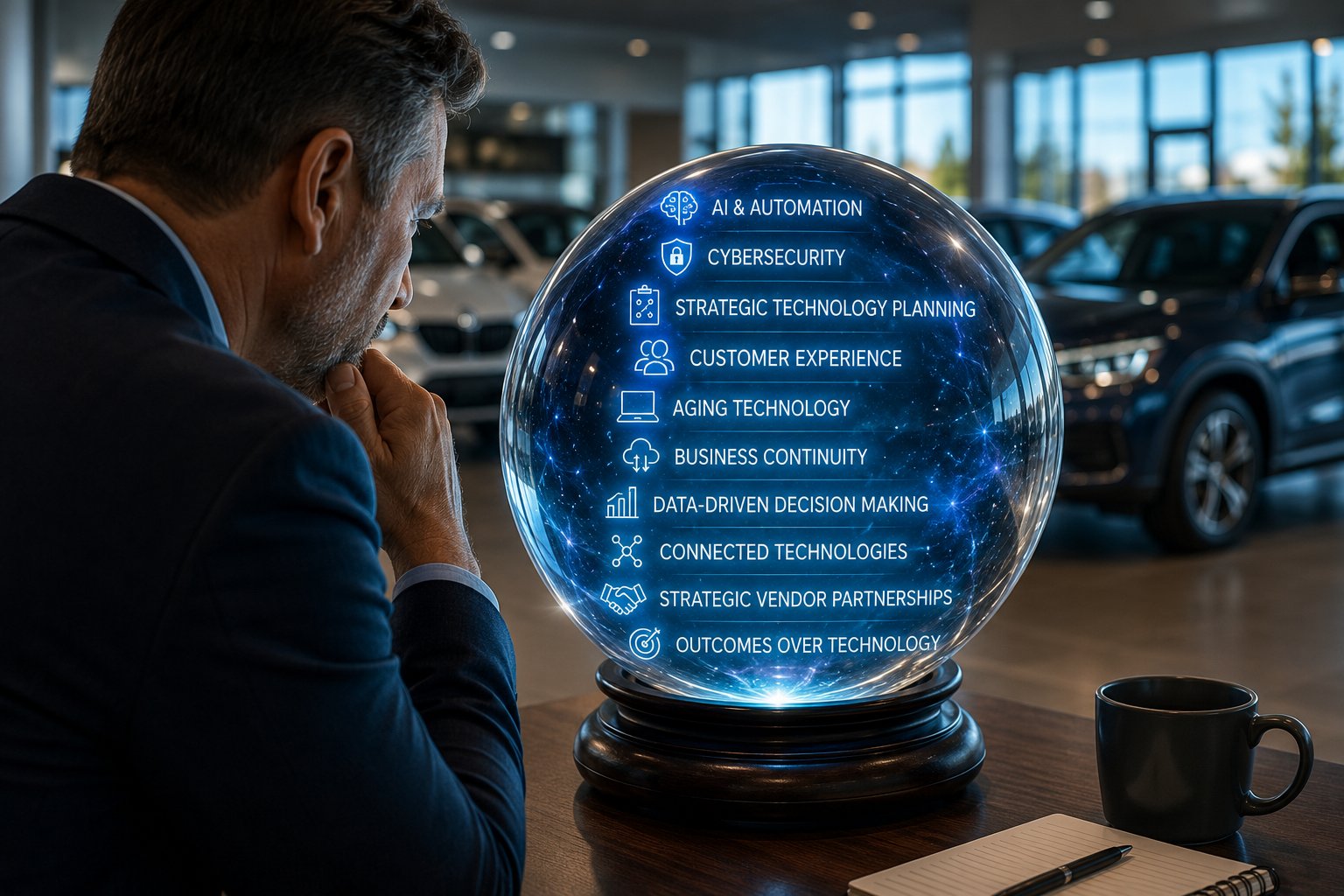
In this guide, we'll explore ten technology trends that are already influencing the way auto dealerships operate. More importantly, we'll explain why they matter, how they may affect your dealership over the coming years, and what you can do today to prepare for the future.
Why Dealership Leaders Should Pay Attention to Technology Trends
Technology has always played a role in auto dealerships, but its influence on day-to-day operations continues to grow. Sales, service, finance, parts, accounting, and customer communications all depend on technology working reliably behind the scenes. As dealerships adopt new software, connected systems, and digital processes, technology decisions increasingly affect productivity, customer satisfaction, cybersecurity, and overall business performance.
At the same time, the pace of change has accelerated. Artificial intelligence is beginning to automate routine tasks. Cybersecurity threats continue to evolve. Customers expect faster communication and more convenient digital experiences. Regulatory requirements and cyber insurance standards are becoming more demanding. Even routine technology decisions, such as replacing computers or selecting software, have become more strategic than they were just a few years ago.
For dealership leadership, the challenge isn't keeping up with every new technology. It's understanding which trends are likely to have a meaningful impact on the business and making informed decisions about where to invest time and resources.
The dealerships that are best positioned for the future aren't necessarily the ones with the newest technology. They're the ones that regularly evaluate their technology, plan for future needs, and make investments that support their long-term business goals. Rather than reacting to problems or chasing every new trend, they focus on technology that improves operations, strengthens security, supports employees, and enhances the customer experience.
The trends in this guide aren't predictions about some distant future. They're changes that are already influencing how successful dealerships operate today. Understanding them now can help your dealership make better decisions, avoid costly surprises, and prepare for the opportunities and challenges ahead.
Trend #1: Artificial Intelligence Will Become Part of Everyday Operations
Artificial intelligence (AI) is quickly moving from a new technology to a practical business tool. While AI won't replace the knowledge, experience, or relationships that employees bring to an auto dealership, it can help automate routine tasks, improve access to information, and allow employees to spend more time serving customers.
Many dealerships are already using AI in ways they may not even realize. Customer service platforms can answer common questions after hours, marketing tools can help create content more efficiently, and productivity applications can summarize meetings, draft emails, organize information, and assist with everyday administrative work. As AI capabilities continue to improve, these types of tools will become increasingly common throughout dealership operations.
The greatest opportunity isn't replacing employees—it's helping them work more efficiently. Sales consultants can spend less time creating follow-up emails. Service advisors can communicate more quickly with customers. Managers can analyze reports faster and spend more time making decisions instead of gathering information. Administrative teams can automate repetitive tasks that previously required significant manual effort.
Like any technology, AI should be implemented thoughtfully. It works best when combined with human experience, sound judgment, and appropriate oversight. Dealerships must also consider data privacy, cybersecurity, and employee training when adopting AI-powered tools, especially when those tools may process sensitive customer or business information.
Over the next several years, dealerships that learn where AI provides genuine business value will likely gain advantages in productivity, customer service, and operational efficiency. The goal isn't to use AI because it's new. The goal is to use it where it helps employees work smarter, improve the customer experience, and support better business decisions.
Trend #2: Cybersecurity Will Continue to Be a Business Priority
Cybersecurity is no longer just an IT responsibility—it's a business responsibility. Every auto dealership relies on technology to manage customer information, process financial transactions, communicate with employees, and keep daily operations running smoothly. As dealerships become more connected, the potential impact of a cybersecurity incident continues to grow.
Today's cyber threats go far beyond viruses or spam emails. Ransomware attacks can interrupt dealership operations, phishing emails can compromise employee accounts, and stolen credentials can expose sensitive customer information. Even a relatively small security incident can lead to operational disruptions, financial losses, reputational damage, and increased scrutiny from regulators or insurance providers.
At the same time, expectations continue to evolve. The FTC Safeguards Rule requires many dealerships to implement and maintain a comprehensive information security program, while cyber insurance providers increasingly require safeguards such as multi-factor authentication (MFA), endpoint protection, employee security awareness training, and secure backup strategies before issuing or renewing coverage.
The most successful dealerships won't treat cybersecurity as a one-time technology project. They'll view it as an ongoing business process that evolves alongside new threats, changing regulations, and business growth. Regular risk assessments, employee education, technology reviews, and continuous improvement will become standard business practices rather than emergency responses after an incident occurs.
The goal isn't to eliminate every cyber risk—no organization can. The goal is to build a resilient dealership that can reduce risk, protect customer information, support compliance, and continue serving customers even when new threats emerge.
Trend #3: Technology Decisions Will Become More Strategic
Technology decisions are becoming less about purchasing hardware or software and more about supporting long-term business objectives. As dealerships become increasingly dependent on technology, every investment has the potential to influence productivity, customer satisfaction, cybersecurity, operational efficiency, and profitability.
In the past, many technology decisions were reactive. A server failed, so it was replaced. Computers became too slow, so new ones were purchased. A cybersecurity incident occurred, so additional security tools were added. While those decisions solved immediate problems, they often lacked a broader strategy for supporting the business.
Today's dealership leaders are taking a different approach. Instead of asking, "What technology do we need?" they're asking, "What business challenge are we trying to solve?" That shift leads to more thoughtful decisions about budgeting, hardware replacement, cybersecurity, software, and long-term planning.
Strategic technology planning also helps reduce surprises. Rather than waiting for equipment to fail unexpectedly or making rushed purchasing decisions, dealerships can develop replacement schedules, prioritize investments, and spread costs over multiple years. This approach supports more predictable budgeting while reducing the operational disruptions that often accompany emergency technology purchases.
Technology strategy should also evolve alongside the business. As your dealership grows, introduces new services, expands locations, or adapts to changing customer expectations, your technology should continue supporting those goals rather than becoming a barrier to progress.
The dealerships that gain the greatest value from technology won't necessarily spend the most money. They'll make intentional investments that align with their business objectives, improve daily operations, and prepare the organization for future growth.
Trend #4: Customer Expectations Will Continue to Rise
Today's customers expect convenience, speed, and clear communication throughout their buying and service experience. Many of those expectations are shaped by interactions with retailers, banks, healthcare providers, and other businesses that have embraced digital tools. As a result, customers increasingly expect the same level of responsiveness from their auto dealership.
Customers want quick responses to online inquiries, accurate appointment scheduling, timely service updates, and the ability to communicate using their preferred channels, whether that's phone, text, or email. They also expect dealership employees to have the information they need without unnecessary delays or repeated questions.
Meeting these expectations isn't about adding technology for technology's sake. It's about removing friction from the customer experience. Reliable systems, well-integrated software, secure networks, and dependable devices allow employees to focus on serving customers instead of working around technical issues. When technology works as intended, customers experience shorter wait times, better communication, and more consistent service.
Customer expectations will continue to evolve as new technologies become more common, but the underlying goal remains the same: make it easier for customers to do business with your dealership. Dealerships that regularly evaluate their processes and use technology to improve the customer experience will be better positioned to build loyalty, generate referrals, and remain competitive.
Technology alone won't create an exceptional customer experience, but it can remove many of the obstacles that prevent employees from delivering one.
Trend #5: Aging Technology Will Become More Expensive to Ignore
Every dealership depends on technology to keep daily operations moving. Computers, servers, network equipment, and other devices support everything from sales and service to accounting and customer communication. As these systems age, however, they become more likely to affect productivity, increase support costs, and create unnecessary business risk.
Many organizations postpone replacing aging technology because it still appears to be working. While delaying replacement may reduce short-term expenses, older equipment often costs more over time through slower performance, unexpected failures, increased downtime, and higher maintenance costs. Employees may spend valuable time waiting for applications to load, troubleshooting recurring issues, or working around outdated systems instead of focusing on customers.
Older technology can also create security challenges. Manufacturers eventually stop providing security updates for aging hardware and operating systems, leaving dealerships more vulnerable to cyber threats. In some cases, outdated equipment may no longer support newer business applications or security features, making future upgrades more complicated and expensive.
Rather than waiting for equipment to fail, many dealerships are adopting planned technology lifecycle strategies. Replacing computers, servers, and networking equipment on a predictable schedule helps improve reliability, simplify budgeting, and reduce the risk of unexpected business disruptions. Planned replacements also allow dealerships to take advantage of improvements in performance, security, and energy efficiency without making emergency purchasing decisions.
Technology should be viewed as a long-term business asset, not simply an expense. Investing in reliable, up-to-date technology helps employees work more efficiently, supports a better customer experience, and reduces many of the risks associated with aging infrastructure.
Trend #6: Business Continuity Will Become a Competitive Advantage
Unexpected disruptions are an unavoidable part of running any business. Severe weather, power outages, internet failures, cyberattacks, equipment failures, and other unforeseen events can interrupt dealership operations with little warning. The question isn't whether disruptions will occur, it's how prepared your dealership will be when they do.
In the past, business continuity was often viewed as disaster planning. Today, it's a competitive advantage. Dealerships that can continue serving customers, communicate effectively with employees, and recover quickly from unexpected events are better positioned to protect revenue, maintain customer confidence, and minimize operational downtime.
Preparing for disruptions goes beyond backing up data. It includes documenting critical business processes, identifying essential systems, developing communication plans, testing recovery procedures, and ensuring employees understand their roles during an unexpected event. The more prepared an organization is before a disruption occurs, the faster it can recover when one does.
Business continuity planning also supports long-term resilience. As dealerships rely on more cloud services, connected applications, and digital workflows, understanding how those systems work together becomes increasingly important. A disruption affecting one system can have a ripple effect across multiple departments if contingency plans aren't in place.
The dealerships that recover most quickly aren't necessarily the ones with the largest technology budgets. They're the ones that have invested time in planning, testing, and continuously improving their ability to respond when business doesn't go according to plan.
Trend #7: Data Will Play a Bigger Role in Decision-Making
Auto dealerships generate an enormous amount of data every day. Sales performance, service operations, inventory, financial reports, customer satisfaction, employee productivity, and marketing results all provide valuable insights into how the business is performing. The challenge isn't collecting more data, it's turning that information into better business decisions.
Modern technology makes it easier than ever to access reports and dashboards, but having information available doesn't automatically create value. Successful dealerships focus on identifying the key performance indicators (KPIs) that matter most and using that information to guide strategic decisions rather than relying solely on instinct or historical practices.
Artificial intelligence is also beginning to change how leaders interact with business data. Instead of manually reviewing multiple reports, managers can use AI-powered tools to summarize trends, identify anomalies, and answer questions more quickly. While these tools don't replace experience or sound judgment, they can help dealership leaders spend less time gathering information and more time acting on it.
As technology continues to evolve, dealerships that effectively use data will be better equipped to identify opportunities, respond to challenges, and measure the success of their investments. Whether evaluating employee productivity, customer satisfaction, cybersecurity, or financial performance, better information leads to better decisions.
The goal isn't to measure everything, it's to focus on the information that helps move the business forward.
Trend #8: Connected Technologies Will Continue to Transform Dealership Operations
Today's auto dealerships rely on more connected technology than ever before. Dealer Management Systems (DMS), CRM platforms, accounting software, manufacturer applications, communication tools, cloud services, and cybersecurity solutions all work together to support daily operations. As technology continues to evolve, these systems will become even more interconnected.
This increased connectivity offers significant business benefits. Employees can access information more quickly, collaborate more effectively, and provide customers with faster, more consistent service. Cloud-based applications also make it easier to support remote work, simplify software updates, and improve access to business information across multiple locations.
At the same time, greater connectivity increases the importance of planning and oversight. When systems are integrated, a problem with one application, internet connection, or technology vendor can affect multiple business processes. That's why dealerships need reliable infrastructure, dependable internet connectivity, strong cybersecurity, and a clear understanding of how their critical business systems work together.
As dealerships continue adopting new technologies, leaders should evaluate how each solution fits into their overall technology strategy rather than viewing it as a standalone purchase. Well-integrated systems help improve efficiency and reduce frustration, while disconnected technologies can create duplicate work, inconsistent information, and unnecessary complexity.
Technology ecosystems will continue to grow over the next several years. The dealerships that benefit most will be those that focus on building reliable, secure, and well-integrated technology environments that support employees, customers, and long-term business growth.
Trend #9: Technology Vendors Will Become More Strategic Business Partners
Technology has become too important for dealerships to manage through one-off purchasing decisions or transactional vendor relationships. Most dealerships rely on multiple technology providers, including their Dealer Management System (DMS), software vendors, telecommunications providers, cybersecurity vendors, copier companies, internet service providers, and Managed IT Services provider. As these systems become more interconnected, coordination between vendors becomes increasingly important.
For dealership leadership, managing technology is no longer just about selecting the lowest-priced solution. It's about working with partners who understand the dealership's business objectives, communicate effectively, and help support long-term success. A technology decision in one area can affect cybersecurity, employee productivity, customer experience, compliance, and future technology investments.
Strong vendor relationships can also simplify operations. Rather than acting as the go-between for multiple providers during an outage or technology issue, dealerships benefit from partners who collaborate, share information, and work together to resolve problems quickly. This reduces frustration for employees and allows dealership leadership to stay focused on running the business instead of managing technical issues.
As technology continues to evolve, dealerships should periodically evaluate both the solutions they use and the partners who support them. A vendor that was the right fit five years ago may no longer meet the dealership's current needs. Regular reviews help ensure technology providers continue to align with business goals, deliver value, and support future growth.
Technology vendors should do more than fix problems. The best partners help dealerships plan ahead, reduce risk, improve operations, and make informed decisions that support long-term business success.
Trend #10: Technology Investments Will Be Judged by Business Outcomes
Technology has always required investment, but the way dealerships evaluate those investments is changing. Rather than focusing on the latest hardware, software, or individual features, dealership leaders are increasingly asking a more important question: How does this investment help the business?
Every technology decision should support a meaningful business objective. That might mean improving employee productivity, enhancing the customer experience, reducing cybersecurity risk, supporting compliance, minimizing downtime, or creating more predictable operating costs. When technology investments are tied to measurable business outcomes, it's easier to prioritize spending and demonstrate value.
This shift also changes how technology projects are planned. Instead of purchasing new technology simply because it's available or replacing systems only after they fail, successful dealerships evaluate how each investment fits into their long-term strategy. They consider the impact on employees, customers, operations, and future growth before making decisions.
Measuring business outcomes also encourages continuous improvement. After implementing new technology, dealership leaders should evaluate whether it achieved the intended results. Did it reduce downtime? Improve response times? Increase productivity? Strengthen security? Answering these questions helps guide future investments and ensures technology continues to support the dealership's evolving needs.
The dealerships that gain the greatest value from technology won't necessarily spend the most money. They'll make informed decisions based on business goals, regularly review their technology strategy, and invest where they can create the greatest long-term impact.
How to Prepare Your Auto Dealership for the Future
While technology will continue to evolve, the fundamentals of good business leadership remain the same. The goal isn't to adopt every new technology or chase every emerging trend. It's to make informed decisions that support your dealership's long-term success.
Here are six practical steps dealership leaders can take to prepare for the years ahead:
1. Develop a Long-Term Technology Strategy
Technology should support your business goals, not drive them. Review your technology at least annually and develop a plan that aligns future investments with your dealership's objectives, budget, and growth plans.
2. Budget for Technology Proactively
Unexpected technology expenses can disrupt both operations and finances. Establishing a technology budget and planned equipment replacement schedule helps reduce surprises and makes it easier to invest in the right solutions at the right time.
3. Make Cybersecurity an Ongoing Priority
Cyber threats will continue to evolve. Regular risk assessments, employee security awareness training, software updates, secure backups, and multi-factor authentication should all be part of an ongoing cybersecurity program—not one-time projects.
4. Invest in Your Employees
Technology is most effective when employees know how to use it confidently. Provide training on new systems, encourage continuous learning, and help employees understand how technology can improve their productivity and better serve customers.
5. Review Your Technology Partners
Your technology vendors should support your business goals, not simply respond when something breaks. Regularly evaluate whether your providers are helping your dealership improve operations, reduce risk, and prepare for future growth.
6. Measure Business Results
Technology investments should deliver measurable value. Track improvements in productivity, customer satisfaction, system reliability, cybersecurity, and operational efficiency to ensure your technology continues supporting your dealership's success.
Preparing for the future doesn't require predicting what's next. It requires building a strong foundation that allows your dealership to adapt as technology, customer expectations, and business needs continue to evolve.
Frequently Asked Questions
What is the biggest technology trend affecting auto dealerships today?
Artificial intelligence (AI) is one of the most significant technology trends affecting auto dealerships today. AI-powered tools are helping employees automate routine tasks, improve communication, analyze data more efficiently, and increase productivity. At the same time, dealerships continue to face growing cybersecurity risks, evolving customer expectations, and increasing reliance on connected technology. Rather than focusing on a single trend, dealership leaders should understand how these changes work together to support long-term business success.
How often should an auto dealership review its technology strategy?
Most dealerships should review their technology strategy at least once a year. Annual reviews provide an opportunity to evaluate aging equipment, cybersecurity risks, software needs, technology budgets, and upcoming business initiatives. Technology should also be reviewed whenever the dealership experiences significant growth, adds a new location, adopts new business systems, or undergoes major operational changes.
How can technology improve productivity in an auto dealership?
Technology helps improve productivity by reducing repetitive tasks, improving access to information, automating routine processes, and minimizing downtime caused by outdated or unreliable systems. Modern tools—including AI-powered applications—can help employees spend less time on administrative work and more time serving customers. The greatest productivity gains occur when technology supports employees rather than creating additional complexity.
How can dealerships prepare for future technology changes?
Preparation begins with planning rather than predicting. Dealerships should develop a long-term technology strategy, maintain a technology budget, replace aging equipment on a planned schedule, invest in cybersecurity, train employees, and regularly evaluate their technology partners. A strong technology foundation makes it easier to adapt as business needs and technology continue to evolve.
Do small and mid-sized dealerships need a technology strategy?
Yes. Every dealership depends on technology to support daily operations, regardless of size. A documented technology strategy helps prioritize investments, reduce unexpected expenses, improve cybersecurity, and ensure technology supports the dealership's business goals. Smaller dealerships often benefit even more from strategic planning because they have fewer resources available to respond to unexpected technology issues.
How do I know if our dealership's technology is supporting our business goals?
A good starting point is to evaluate whether technology is improving measurable business outcomes. Consider questions such as:
- Are employees working efficiently?
- Are customers receiving timely, consistent service?
- Has downtime been reduced?
- Are cybersecurity risks being managed effectively?
- Is technology spending predictable and aligned with business priorities?
If technology is helping your dealership operate more efficiently, reduce risk, and deliver a better customer experience, it's likely supporting your business goals.
Conclusion
Technology will continue to shape the future of the automotive industry, but successful dealerships won't be defined by the number of technology tools they own. They'll be defined by how effectively they use technology to support their people, serve their customers, and achieve their business goals.
The trends discussed in this guide are already influencing dealerships across the country. Artificial intelligence, cybersecurity, strategic planning, evolving customer expectations, connected systems, and data-driven decision-making are no longer emerging concepts—they're becoming part of everyday dealership operations. Understanding these trends today allows dealership leaders to make informed decisions that reduce risk, improve efficiency, and prepare for future opportunities.
The good news is that preparing for the future doesn't require chasing every new technology. It requires a clear strategy, thoughtful planning, and trusted partners who understand how technology supports the business. By regularly evaluating your technology, investing where it creates the greatest value, and aligning technology decisions with your long-term objectives, your dealership will be better positioned for whatever comes next.
Whether your goal is improving employee productivity, enhancing the customer experience, strengthening cybersecurity, or building a long-term technology strategy, the best time to prepare is before technology becomes a business challenge.
Ready to Prepare Your Dealership for the Future?
Technology decisions shouldn't be made in isolation—they should support your dealership's business goals, operational priorities, and long-term growth.
At Tech-Marvel, we help auto dealerships evaluate their current technology, identify opportunities for improvement, reduce cybersecurity risks, and develop practical strategies that align with their business objectives.
If you'd like to discuss your dealership's technology strategy, we're here to help.
Schedule a Discovery Call to talk about your goals, challenges, and plans for the future. Together, we can build a technology roadmap that supports your dealership today and prepares it for tomorrow.