As collision centers grow by opening new locations or acquiring existing shops, keeping operations consistent becomes more challenging. Each location often has its own way of doing things, from the equipment employees use to the way technology is managed and supported. Over time, those differences can lead to more downtime, slower onboarding, inconsistent customer experiences, and higher operating costs.
Standardizing technology isn't about making every location identical. It's about creating a consistent foundation that allows every shop to operate more efficiently. When employees have the same tools, the same support, and the same technology standards, managers spend less time solving problems and more time focusing on production, customer service, and growing the business.
Whether you operate two locations or twenty, a well-planned technology strategy can improve reliability, strengthen cybersecurity, simplify employee onboarding, and make future growth much easier to manage.
Why Growth Creates Technology Challenges
Growth is exciting, but it rarely happens in a straight line.
Many collision centers expand by opening new locations or acquiring existing shops. Each new location often comes with its own computers, internet provider, Wi-Fi equipment, printers, software settings, and IT support history. At the time, keeping what already works seems like the fastest and least disruptive option.
Over the years, however, those independent decisions begin to add up.
One location has newer computers while another is still using aging equipment. Wi-Fi performs well in one shop but struggles in another. Employees moving between locations encounter different setups, and managers spend valuable time tracking down technology issues that shouldn't exist in the first place.
The result isn't just inconsistent technology. It's inconsistent operations.
The most successful multi-location collision centers recognize that every location should deliver the same reliable experience for employees and customers. Standardizing technology creates that consistency, making it easier to support your team, reduce downtime, strengthen security, and confidently add new locations as your business grows.
What Does Inconsistent Technology Actually Cost?
When every collision center location operates differently, the impact extends far beyond the IT department. Small inconsistencies can affect productivity, create frustration for employees, and make it more difficult to deliver a consistent customer experience.
At first, these issues may seem minor. One location has slower computers. Another struggles with unreliable Wi-Fi. A third uses different equipment or follows a different process. Individually, they're manageable. Together, they create unnecessary obstacles that affect your entire operation.
Managers often feel the impact first. Instead of focusing on production, customer service, or growing the business, they're spending time dealing with recurring technology issues, coordinating with different vendors, or helping employees work around problems that should have already been solved.
Employees notice the differences as well. Someone who regularly works at multiple locations may find that every shop has a different computer setup, different printers, or a different way of accessing the applications they use every day. New employees take longer to become productive because the experience isn't consistent from one location to the next.
Inconsistent technology can also make it harder to support customers. If one location experiences frequent outages or slower systems, estimates take longer, communication is delayed, and productivity suffers. While customers may never see the technology behind the scenes, they do notice when the repair process becomes slower or less efficient.
As your business grows, these inconsistencies become more expensive. Every new location adds another environment to manage, another set of equipment to maintain, and another opportunity for technology to operate differently than the rest of the organization.
Standardizing technology helps eliminate these obstacles by creating a consistent foundation across every location. Employees know what to expect, managers spend less time solving avoidable problems, and your business is better prepared to grow without adding unnecessary complexity.
What Should Every Collision Center Standardize?
The goal of standardization isn't to make every location look exactly the same. It's to ensure every employee has a consistent experience, every manager can rely on the same processes, and every location is supported using the same standards.
When technology is standardized, adding a new location becomes easier, employees can move between shops without disruption, and your IT environment becomes much simpler to manage.
Here are the five areas every multi-location collision center should focus on.
1. Create a Consistent Employee Experience
Employees shouldn't have to learn a different way of working simply because they're at another location.
Whether an estimator is covering for someone at another shop or a manager oversees multiple locations, they should have access to the same applications, the same login process, and the same technology experience. Consistency reduces training time, minimizes frustration, and helps employees become productive more quickly.
2. Standardize How Every Location Operates
Every location should follow the same technology standards, from internet connectivity and wireless coverage to computer replacement schedules and software updates.
When one location is managed differently than another, small problems become harder to identify and resolve. Using a consistent approach across every shop makes support more efficient and creates a more reliable operating environment.
3. Apply the Same Security Standards Everywhere
Cybersecurity is only as strong as your weakest location.
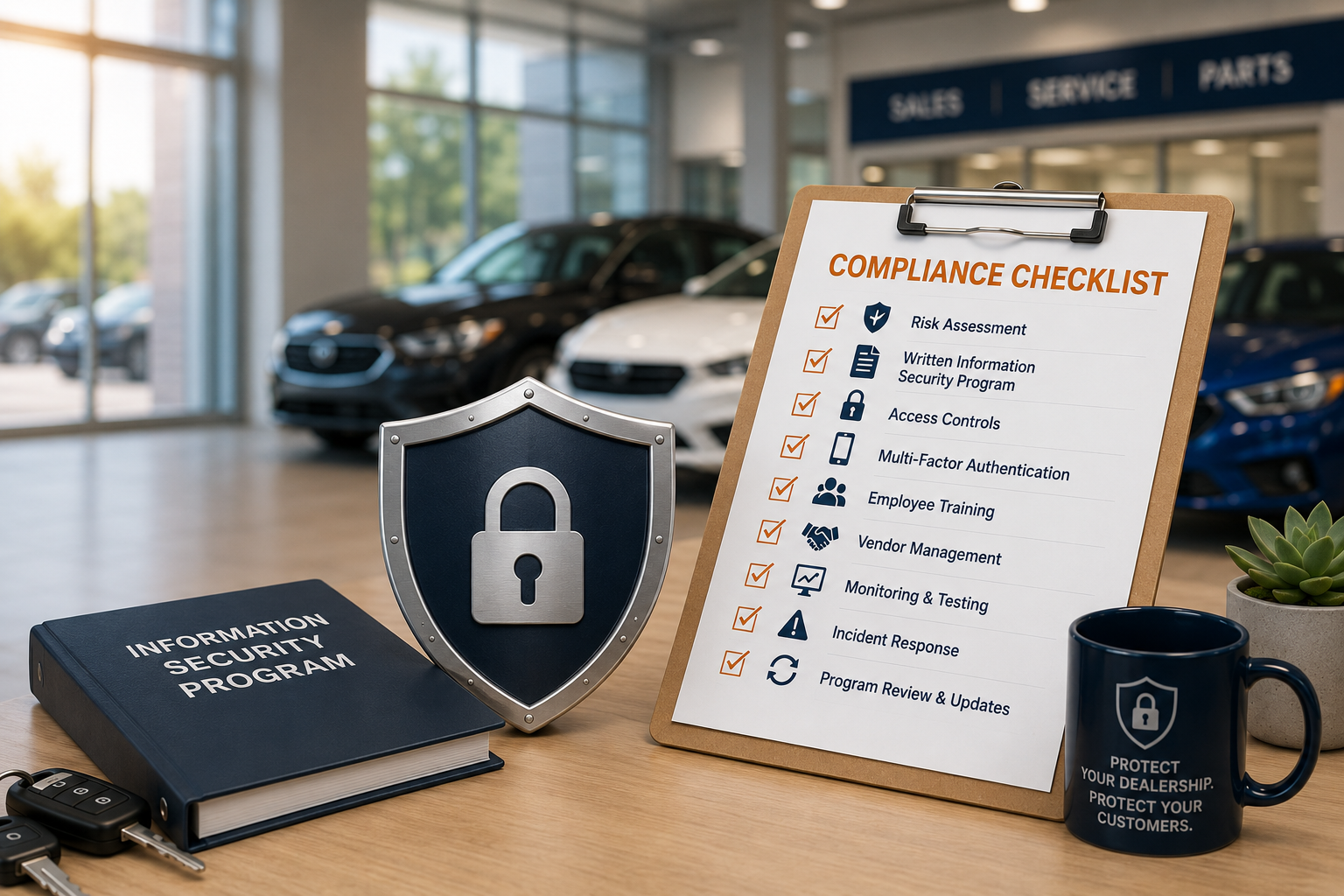
Every collision center should follow the same security policies, including multi-factor authentication, device protection, backup procedures, and employee access controls. Consistent security standards reduce risk and help protect customer information, business data, and daily operations.
4. Simplify Employee Onboarding and Offboarding
Bringing on a new employee shouldn't require reinventing the process every time.
With standardized technology, new employees receive the same equipment, the same applications, and the same access regardless of which location they join. Likewise, when an employee leaves the company, access can be removed quickly and consistently across every system.
A standardized onboarding process saves time, improves security, and creates a better experience for employees from their first day.
5. Plan for Growth Instead of Reacting to Problems
As your business grows, technology decisions become more important.
Replacing aging computers before they fail, following a consistent equipment lifecycle, documenting each location, and planning for future expansion helps prevent costly surprises. Instead of reacting to emergencies, you can make technology investments that support your long-term business goals.
The most successful collision centers don't standardize technology because they enjoy managing IT. They do it because consistent operations make it easier to serve customers, support employees, and confidently grow the business.
Real-World Example: Standardizing Technology Across Six Collision Center Locations
One of our clients had grown to six collision center locations over time. Like many growing businesses, each shop had developed its own technology environment. Computers were purchased at different times, servers varied from one location to another, Wi-Fi performance was inconsistent, and security practices weren't standardized across the organization.
As a result, employees had different experiences depending on which location they were working from. Technology issues took longer to troubleshoot because every shop was unique, and managers spent more time dealing with operational disruptions than they should have.
Rather than continuing to solve problems one location at a time, we developed a standard technology plan for the entire organization.
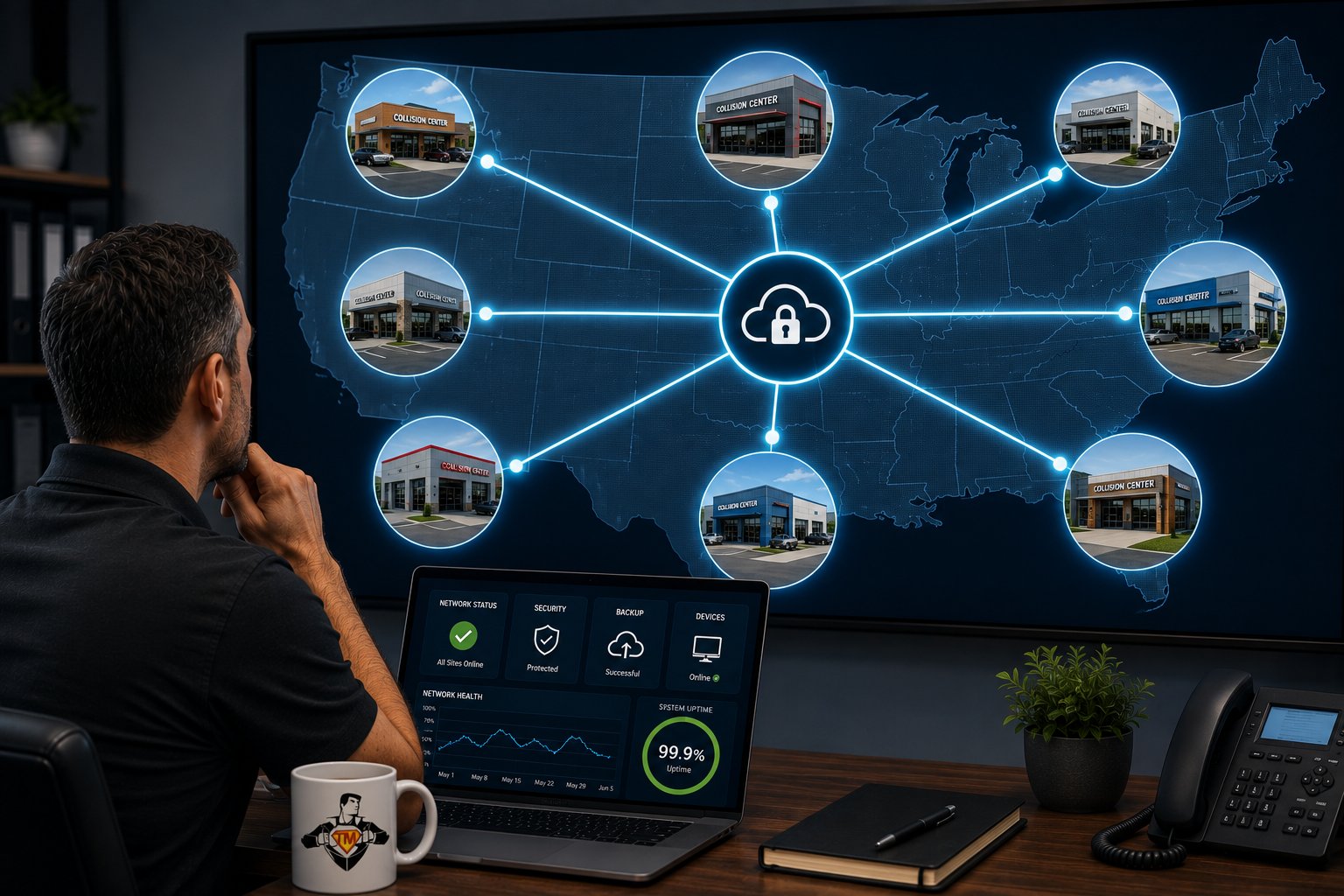
We standardized workstations, modernized the network infrastructure, improved wireless coverage, strengthened cybersecurity, and created consistent onboarding and support processes across all six locations. Instead of treating each shop as a separate environment, we built a technology foundation that supported the business as a whole.
The results were immediate and measurable.
- Email performance improved from hours to seconds.
- Internet reliability increased to 99.9% uptime.
- Wireless dead zones and dropped connections were eliminated.
- Employees had a consistent technology experience regardless of location.
- New employee onboarding became faster and more consistent.
- Managers spent less time dealing with recurring technology issues.
- The business gained a stronger security posture and a technology platform that could support future growth.
The biggest improvement wasn't a new server or faster Wi-Fi. It was consistency. Every location was operating from the same technology playbook, making the business easier to support, easier to manage, and better prepared for continued expansion.
Is It Time to Standardize Your Technology?
Many collision center owners don't realize how much inconsistency exists until it begins affecting day-to-day operations.
If any of the following sound familiar, it may be time to evaluate your technology strategy.
- Every location has different computers or equipment.
- Employees moving between locations encounter different systems or processes.
- Technology problems seem isolated to certain shops.
- New employee setup takes longer than it should.
- Different locations follow different security practices.
- You rely on multiple vendors to support different locations.
- Technology decisions are made one emergency at a time instead of following a long-term plan.
None of these issues happen overnight. They develop gradually as a business grows. The good news is that they can also be corrected with a thoughtful standardization strategy that supports your operations today and prepares your collision center for future growth.
Conclusion
Growing a successful collision center requires consistency. Customers expect the same level of service at every location, employees need the right tools to do their jobs efficiently, and managers should be able to focus on running the business instead of solving recurring technology problems.
Technology standardization provides the foundation that makes all of that possible. By creating a consistent environment across every location, collision centers can improve productivity, strengthen cybersecurity, simplify support, and make future expansion far easier to manage.
As your business grows, your technology should make that growth easier, not more complicated. A well-planned standardization strategy helps ensure every location operates with the same reliability, security, and efficiency, allowing your team to stay focused on what matters most: repairing vehicles and delivering an exceptional customer experience.