Most dealership leaders know they should have a plan for what happens when an important technology system becomes unavailable.
The harder part is getting that plan written down.
What does sales do if the CRM is unavailable? Who calls the DMS provider? What happens if the internet goes down? How does finance keep moving if employees can't reach a lender platform? Who keeps everyone informed while several vendors are troubleshooting the problem?
In many dealerships, the answers exist somewhere. They're just scattered between people's heads, old emails, incomplete documentation and different processes at different locations.
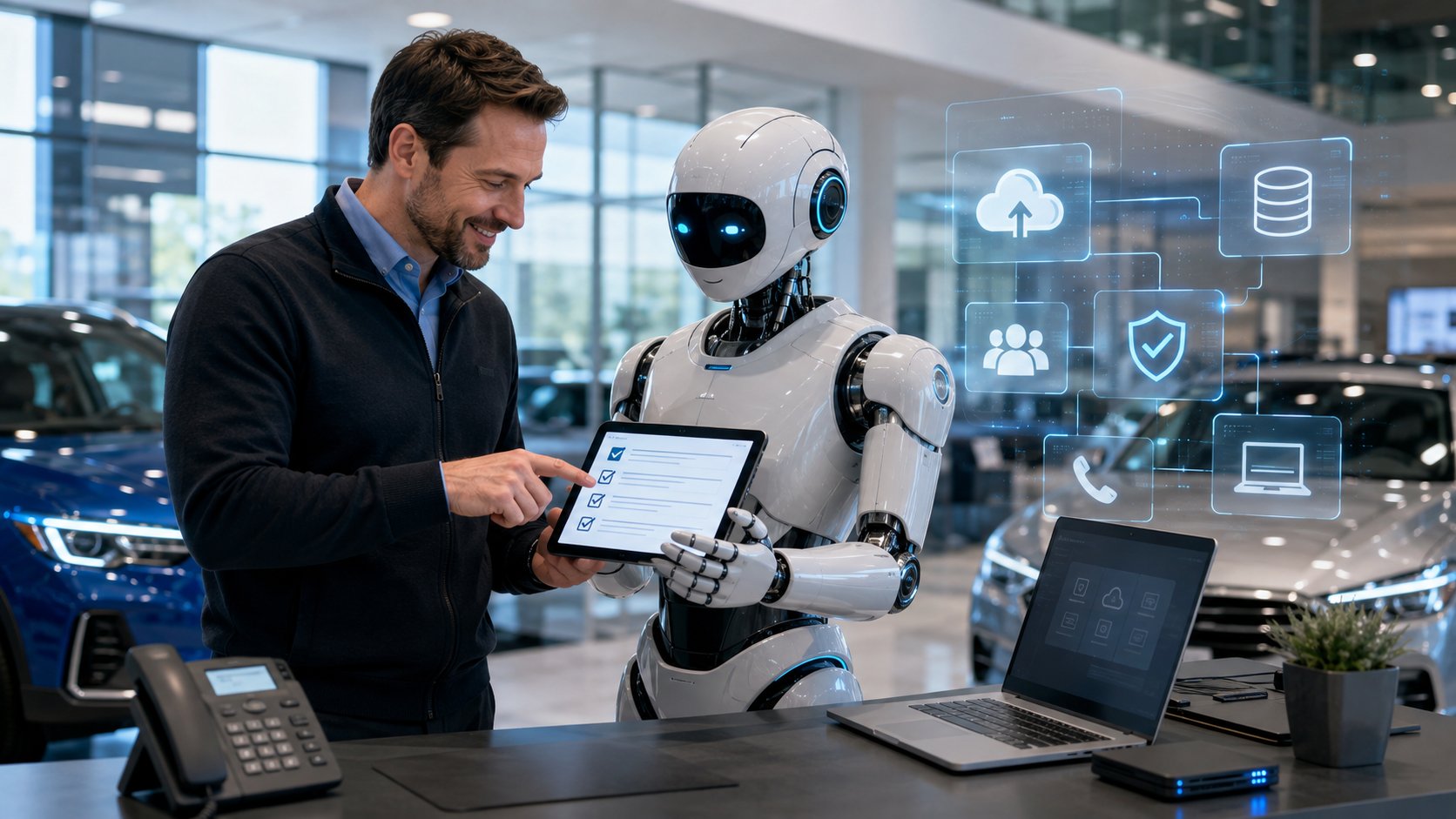
This is one area where artificial intelligence can actually be useful.
Not because AI can build your dealership's recovery strategy for you. It can't.
But it can help turn what your team already knows into something organized enough to review, improve and use.
Here are five practical ways to put it to work.
1. Turn What Your Team Knows Into Written Procedures
A surprising amount of dealership knowledge lives with individual employees.
Someone knows what to do when the phones go down. Someone else knows exactly who to call for a particular service application. The Controller may know which systems accounting needs back first. The General Manager probably knows which two or three systems absolutely cannot stay down for long.
The problem shows up when that person isn't available.
Instead of asking someone to start with a blank document, give an AI tool the rough notes your team already has.
For example:
- Call the internet provider first.
- Open a ticket with the IT company.
- Notify managers at both locations.
- Use cell phones if dealership phones are unavailable.
- Service can continue using the temporary process.
- Accounting needs access restored before afternoon reporting.
AI can turn that into a cleaner first draft your team can review.
That's the useful part. It saves time getting the information organized.
The review still belongs to you.
Your dealership knows how your dealership operates. AI doesn't.
2. Build Simple Outage Checklists
During a real technology problem, nobody wants to dig through a 20-page disaster recovery document looking for the next step.
A one-page checklist is often much more useful.
AI can help create first drafts for situations such as:
- Internet outages
- Phone outages
- DMS or CRM interruptions
- Email or Microsoft 365 outages
- Cybersecurity incidents
- Power outages
- Employee offboarding
- Vendor-access reviews
- Backup recovery
Take an internet outage as an example. A basic checklist might include:
- Confirm which locations and departments are affected.
- Contact the IT provider.
- Notify the internet provider if needed.
- Confirm whether backup connectivity is available.
- Tell department managers what's happening.
- Document temporary procedures.
- Keep leadership updated.
- Confirm normal operations before closing the incident.
Your dealership's version may look completely different.
That's fine.
The value isn't having AI tell you what your outage process should be. It's using AI to turn your real process into something employees can follow when things are moving quickly.
3. Ask AI What You May Be Forgetting
Sometimes the hardest part of preparedness planning isn't answering the questions.
It's knowing which questions to ask.
A vague prompt like:
"What should our disaster recovery plan include?"
will usually produce a vague answer.
Give the tool some useful context instead.
For example:
We operate a two-location auto dealership with sales, service, parts, finance and accounting departments. We depend on a DMS, CRM, lender portals, OEM systems, Microsoft 365, internet-based phones and several outside technology vendors. What questions should leadership answer before creating an IT outage plan?
Now you have something worth discussing.
It may prompt questions such as:
- Which systems must come back first?
- Which departments can temporarily work without them?
- Who contacts each vendor?
- Who can make decisions during an outage?
- How will employees communicate if email or phones are unavailable?
- Can everyone reach important vendor contacts?
- What happens if one location is affected but another isn't?
- Which systems depend on the same internet connection?
- When were backups last tested?
Some questions won't matter to your dealership.
Others may make someone around the table say, "We haven't really thought about that."
That's where this becomes useful.
It's not making the risk decision for you. It's giving your team a better set of questions to work through.
4. Turn Technical Information Into Better Leadership Questions
Dealership leaders shouldn't have to become network engineers or cybersecurity specialists.
They do need enough information to make good business decisions.
That can get difficult when the information they're handed is a backup report, security assessment, vulnerability finding, cyber insurance questionnaire or vendor technical document.
AI can sometimes help translate that material into plain-English questions.
For example:
- What does this actually mean?
- Which dealership operation could it affect?
- Is this something we should handle now or plan for later?
- What happens if we leave it alone?
- What should I ask our IT provider about this?
That can make a conversation with your IT company much more productive.
Be Careful What You Put Into an AI Tool
Dealerships handle customer, employee, financial and system information that should not casually be copied into an AI platform.
Before employees start uploading documents, make sure the dealership has clear rules around:
- Which AI tools are approved
- What information employees can enter
- Whether customer or financial information is prohibited
- Whether passwords or security information can be entered
- How submitted information is handled
- Who reviews AI-generated output
In many cases, you don't need the real data anyway.
Instead of uploading an actual financing document, customer record or security report, remove identifying information or describe the issue in general terms.
You want AI to make the planning easier, not create a new security problem.
5. Keep the Plan From Becoming Outdated
Writing the plan once is the easy part.
Keeping it current is where things usually fall apart.
Dealerships change constantly. Employees leave. Vendors change. New software gets added. Phone systems are replaced. Responsibilities move. Dealer groups add locations.
A recovery document that was accurate three years ago may still look impressive while being almost useless today.
AI can help with the maintenance work.
You can use it to compare an older process with new notes, identify inconsistencies, standardize documentation between locations, turn recent changes into an updated draft or create a list of items leadership should verify.
That can save a lot of administrative time.
But someone still has to confirm that the contacts, systems and responsibilities are correct.
A clean document isn't automatically an accurate document.
Where AI Stops
This is the part I'd pay the most attention to.
AI can produce a very professional-looking recovery plan in a few minutes.
That doesn't mean the plan works.
It can't walk into your dealership and confirm that your backup restores properly.
It can't verify that employees know what to do when the DMS is unavailable.
It can't call the DMS company, internet provider, phone company and IT provider during an outage and keep everyone moving toward a resolution.
It can't tell you whether the recovery time written on paper is realistic for your environment.
And it can't replace someone taking ownership when several vendors are involved.
Those things have to happen in the real world.
A Good Plan Has to Work Outside the Document
This is where your IT provider should be involved.
A useful dealership business-continuity plan should connect the written procedure to the systems the dealership actually depends on.
That means confirming:
- Which systems are most important
- Which systems depend on one another
- Whether backups can actually be recovered
- Who has administrative and vendor access
- What employees should do during an outage
- Which vendors need to be contacted
- Who coordinates an issue involving several vendors
- Whether multiple locations are following the same process
That's why asking AI to simply "write a disaster recovery plan for my dealership" isn't enough.
You may get a great-looking document.
What you need is a plan that reflects your systems, your people, your vendors and the way your dealership actually works.
Use AI to Get Started, Then Test What Matters
AI is very good at helping people get past the blank page.
Use it to organize notes, create first-draft checklists, come up with questions and simplify complicated information.
Then take that work back to the people who understand the dealership and verify the parts that matter.
For Morris County and Northern New Jersey dealerships, Tech Marvel helps leadership get a clearer picture of what's in place, what may need attention and who owns each part of the technology environment.
We can help you look beyond the document at the DMS, CRM, internet, phones, backups, cybersecurity, vendor access and recovery processes your dealership actually depends on.
Schedule Your Free 20-Minute Dealership IT Review
We'll talk through your locations, systems, vendors, recurring technology issues, backups and current priorities.
In 20 minutes, you'll get a clearer picture of what may need attention and whether your current IT and recovery planning are keeping up with the dealership you're running today.
Call Tech Marvel at 862-201-5710 or schedule your free 20-minute dealership IT review.