
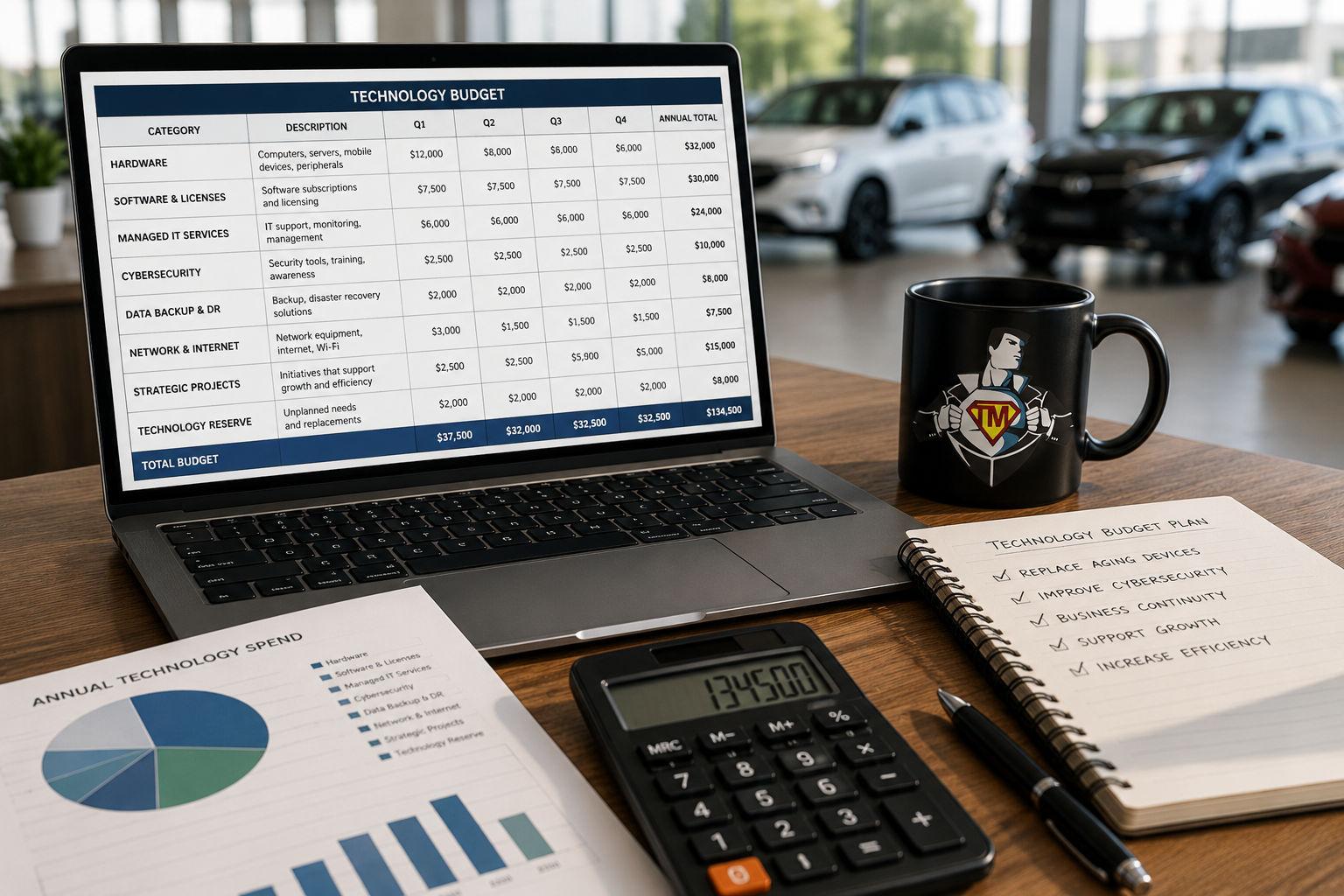
If you've ever been surprised by the cost of replacing servers, upgrading employee computers, or responding to a technology emergency, you're not alone. Many auto dealerships don't have a formal technology budget—they simply purchase equipment when it breaks or becomes an immediate problem. While that approach may seem cost-effective in the short term, it often leads to larger, unplanned expenses and unnecessary disruptions.
A technology budget helps your dealership plan for future technology investments instead of reacting to unexpected costs. It provides a structured approach for replacing aging equipment, strengthening cybersecurity, supporting employee productivity, and aligning technology spending with your dealership's long-term business goals.
Creating a technology budget doesn't mean you'll be able to predict every expense. Unexpected issues can still occur. However, with a well-planned budget, most technology investments become scheduled business decisions rather than emergency purchases.
In this guide, you'll learn what should be included in a dealership technology budget, how far ahead you should plan, common budgeting mistakes to avoid, and how a long-term technology roadmap can help you reduce surprises while supporting your dealership's growth.
What Should Your Technology Budget Include?
An effective technology budget is about more than replacing computers or paying monthly software subscriptions. It should support the day-to-day operation of your dealership while helping you prepare for future growth, reduce business risk, and avoid unexpected expenses.
While every dealership has different needs, most technology budgets should include the following areas.
1. Employee Productivity
Your employees rely on technology to serve customers, process vehicle sales, schedule service appointments, manage inventory, and perform countless daily tasks.
A technology budget should include regular investments in computers, software, and other tools that help employees work efficiently. Reliable technology reduces frustration, minimizes downtime, and allows your team to focus on serving customers instead of waiting for slow or unreliable systems.
2. Cybersecurity
Cybersecurity should be an ongoing investment, not an afterthought.
Your technology budget should account for the tools and services that help protect your dealership from cyber threats, including endpoint security, email protection, multi-factor authentication (MFA), security awareness training, and other safeguards that reduce business risk.
3. Hardware Replacement
Every computer, server, firewall, and network device has a useful life.
Rather than waiting for equipment to fail unexpectedly, a technology budget should include a replacement strategy that spreads investments over several years. This helps avoid large, unplanned expenses while keeping your technology reliable and supported.
4. Business Continuity
Unexpected events happen. Whether it's a cyberattack, hardware failure, power outage, or natural disaster, your dealership should be prepared to recover quickly.
Your technology budget should include backup and disaster recovery solutions that help protect critical business data and reduce downtime if an unexpected event occurs.
5. Strategic Technology Initiatives
Not every technology investment is about replacing aging equipment.
Your dealership may be planning to expand, renovate, improve Wi-Fi coverage, adopt new business applications, or modernize customer-facing technology. Including these projects in your technology budget allows you to invest strategically instead of making rushed decisions when opportunities arise.
How to Create a Technology Budget for Your Dealership
Creating a technology budget doesn't have to be complicated. The goal isn't to predict every future expense—it's to develop a plan that helps your dealership make informed decisions, avoid unexpected costs, and support long-term business goals.
A simple five-step approach can help you build a practical technology budget.
Step 1: Inventory Your Current Technology
Start by understanding what technology your dealership already owns and uses.
This includes computers, servers, networking equipment, software subscriptions, cybersecurity tools, backup solutions, and other technology that supports daily operations.
Knowing what you have—and how old it is—provides the foundation for future planning.
Step 2: Identify Upcoming Replacement Needs
Not every piece of technology needs to be replaced this year.
Review which systems are approaching the end of their useful life and estimate when they'll likely need to be upgraded or replaced. Planning ahead allows you to spread costs over multiple years instead of facing large, unexpected expenses.
Step 3: Include Ongoing Technology Expenses
Some technology costs occur every month or every year.
Your budget should account for recurring expenses such as managed IT services, cybersecurity solutions, software subscriptions, cloud services, backup solutions, internet services, and equipment warranties.
Including these predictable costs helps create a more accurate technology budget.
Step 4: Plan for Business Goals
Technology should support where your dealership is going—not just where it is today.
If you're planning to hire additional employees, renovate your facility, add new services, or improve the customer experience, consider how those initiatives may affect your technology needs.
Budgeting for growth helps prevent technology from becoming a bottleneck.
Step 5: Review Your Budget Annually
Technology changes quickly, and so do business priorities.
Review your technology budget at least once each year to adjust for completed projects, changing business goals, new cybersecurity risks, and upcoming replacement needs.
A yearly review helps ensure your technology investments continue to align with your dealership's objectives.
5 Common Technology Budgeting Mistakes Auto Dealerships Make
Creating a technology budget is an important first step, but how you build and manage that budget can have a significant impact on your dealership. Many unexpected technology expenses aren't caused by bad luck—they're the result of poor planning.
Here are some of the most common technology budgeting mistakes we see.
1. Waiting Until Technology Fails
One of the most common mistakes dealerships make is waiting until a computer, server, or other critical system fails before replacing it.
While this may delay an expense in the short term, it often leads to emergency purchases, unplanned downtime, and higher costs than if the replacement had been planned in advance.
2. Focusing Only on Initial Costs
Technology is an ongoing investment, not a one-time purchase.
When creating a budget, it's important to consider recurring costs such as software subscriptions, cybersecurity services, backup solutions, warranties, and ongoing IT support—not just the price of new equipment.
3. Ignoring Cybersecurity Investments
Cybersecurity isn't a project you complete once and forget about.
Threats continue to evolve, and protecting your dealership requires ongoing investments in security tools, employee training, and regular reviews of your technology environment.
Treating cybersecurity as an optional expense can increase both business and financial risk.
4. Not Planning for Business Growth
Your technology budget should support your dealership's future—not just maintain today's operations.
Hiring additional employees, expanding facilities, adopting new software, or improving the customer experience all have technology implications. Planning for growth helps avoid unexpected costs and delays when opportunities arise.
5. Reviewing the Budget Only When There's a Problem
A technology budget shouldn't sit in a drawer until something breaks.
Reviewing your budget annually—or whenever your business changes significantly—helps ensure your technology investments continue to support your dealership's goals and keeps future replacement needs from becoming surprises.
The dealerships that manage technology most effectively aren't necessarily the ones that spend the most. They're the ones that plan ahead, review their technology regularly, and make informed investment decisions before small issues become expensive problems.
Frequently Asked Questions
How much should an auto dealership budget for technology?
There isn't a one-size-fits-all answer because every dealership has different technology needs, staffing levels, and business goals. Your budget should account for recurring IT services, cybersecurity, hardware replacement, software licensing, backup and disaster recovery, and strategic technology projects. Working with an experienced IT partner can help you develop a budget that aligns with your dealership's size and long-term objectives.
How often should an auto dealership update its technology budget?
Your technology budget should be reviewed at least once a year as part of your annual budgeting process. However, it's also a good idea to revisit your budget whenever your dealership experiences significant changes, such as hiring additional employees, opening a new location, adopting new software, or completing a major technology project.
Should technology be considered an operating expense or a capital expense?
It can be both. Recurring services such as managed IT, cybersecurity, cloud software, and software subscriptions are typically operating expenses, while larger purchases like servers, networking equipment, and computer replacements may be treated as capital expenses. Your accountant can help determine how these investments should be categorized for your business.
Can a managed IT provider help create a technology budget?
Yes. A proactive managed IT provider should do more than fix technology problems. They can help inventory your existing technology, identify upcoming replacement needs, forecast future expenses, prioritize projects, and develop a multi-year technology roadmap that supports your dealership's business goals.
What's the difference between a technology budget and an IT roadmap?
A technology budget focuses on how much you expect to invest in technology over a specific period, usually one year. An IT roadmap looks further ahead by outlining what technology initiatives should happen and when over the next several years. Together, they help dealerships make informed technology decisions while avoiding unexpected expenses.
How can technology budgeting help reduce unexpected IT costs?
Unexpected technology expenses often occur when businesses wait until equipment fails or security issues arise before taking action. A technology budget helps identify replacement needs, recurring costs, and future projects in advance, allowing your dealership to spread investments over time and reduce the likelihood of costly surprises.
Conclusion
Technology is no longer just a support function—it's an essential part of running a successful auto dealership. From keeping employees productive and protecting customer data to supporting growth and reducing downtime, every technology decision has a business impact.
A well-planned technology budget helps you move from reacting to unexpected expenses to making informed, strategic investments. By understanding what to include, planning for future needs, and avoiding common budgeting mistakes, your dealership can better control costs while ensuring technology continues to support your long-term goals.
Whether you're creating your first technology budget or refining an existing one, the most important step is to start planning before technology becomes a problem. A proactive approach gives your dealership greater financial predictability, fewer surprises, and the confidence that your technology investments are aligned with your business objectives.
Complimentary Technology Budget Review
Not sure if your current technology budget is preparing your dealership for the future?
Tech-Marvel offers a complimentary Technology Budget Review for auto dealerships in Northern New Jersey. We'll help you:
- Review your current technology investments
- Identify upcoming hardware replacement needs
- Highlight potential gaps in cybersecurity and business continuity planning
- Discuss future technology initiatives that may impact your budget
- Provide recommendations to help align your technology spending with your dealership's business goals
Whether you're planning next year's budget or looking to create a multi-year technology roadmap, we're here to help you make informed technology decisions.
Schedule your complimentary Technology Budget Review today and start planning with confidence. Schedule your discovery call now.