
If you own or manage an auto dealership, you've likely invested in computers, software, cybersecurity, backups, and IT support over the years. But when was the last time someone stepped back and evaluated how all of those pieces work together to support your business?
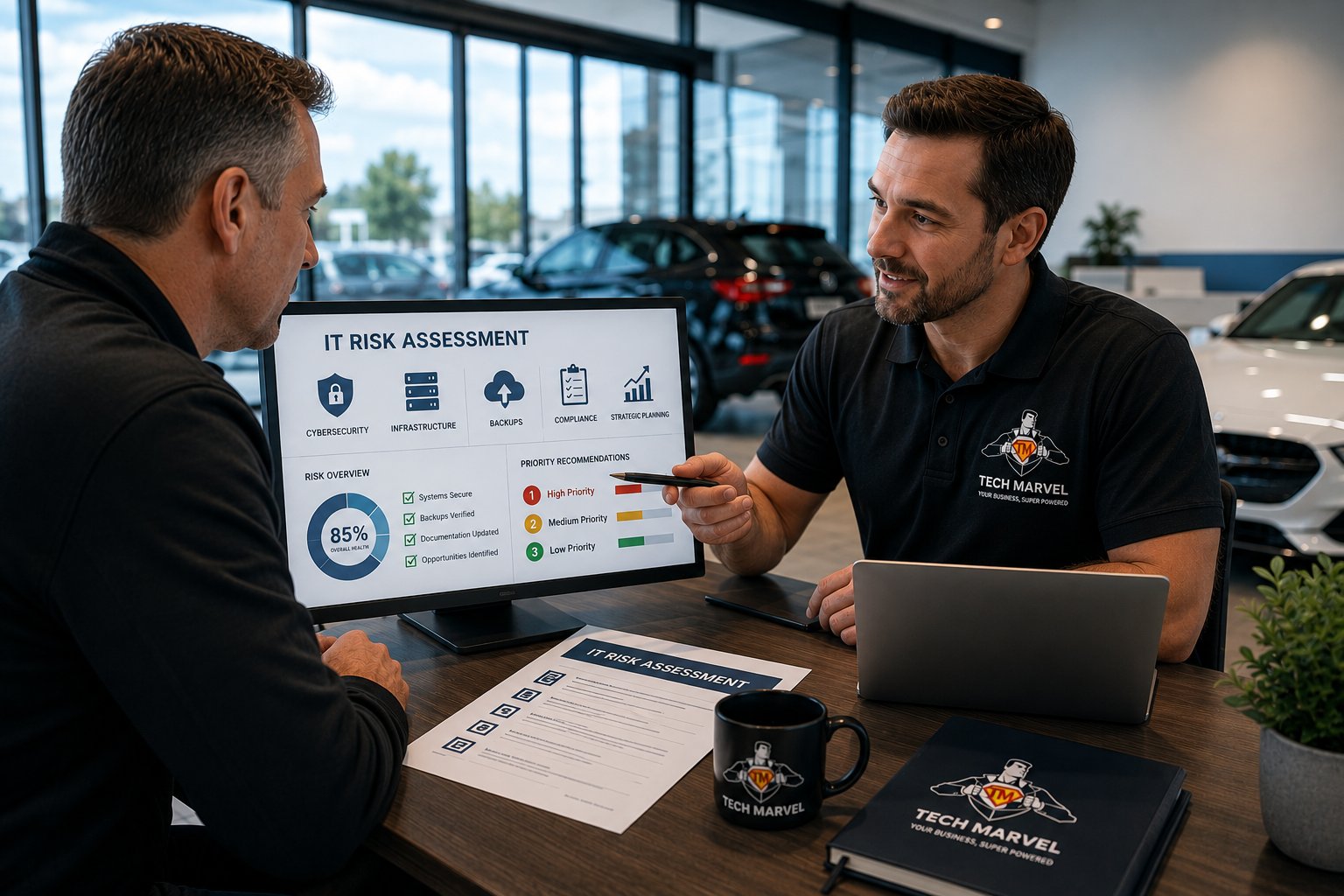
An IT Risk Assessment is a structured review of your dealership's technology environment designed to identify operational, cybersecurity, compliance, and infrastructure risks before they become costly problems. Rather than focusing on a single issue, it provides a comprehensive view of your technology and helps you understand where improvements can reduce risk, improve reliability, and support your dealership's long-term goals.
Many dealership owners assume an IT Risk Assessment is only necessary after a cybersecurity incident, system outage, or compliance issue. The best time to assess your technology is before problems disrupt your employees, customers, or daily operations. Identifying potential risks early gives you the opportunity to prioritize improvements, plan future technology investments, and make informed business decisions instead of reacting to unexpected emergencies.
In this guide, you'll learn what an IT Risk Assessment includes, why it's important for auto dealerships, what types of issues are commonly identified, and how the process can help you build a more secure, reliable, and strategically planned technology environment.
Why an IT Risk Assessment Matters
Technology plays a role in nearly every part of an auto dealership. From processing vehicle sales and scheduling service appointments to managing inventory, communicating with customers, and handling accounting, your employees depend on technology to keep the business running smoothly.
The challenge is that technology doesn't stand still.
Computers age, software changes, cybersecurity threats evolve, employees come and go, and new systems are added over time. Even if your dealership hasn't experienced a major outage or cybersecurity incident, small issues can gradually accumulate without anyone noticing.
An IT Risk Assessment helps identify those issues before they affect your business. Instead of waiting for equipment to fail, discovering security gaps after an incident, or being caught off guard by unexpected technology expenses, you gain a clear understanding of your current environment and a plan for addressing potential risks.
Just as dealerships routinely inspect their facilities, inventory, and financial performance, it's equally important to periodically evaluate the technology your business depends on every day. A proactive assessment can help you reduce downtime, improve cybersecurity, support compliance efforts, and make more informed decisions about future technology investments.
Ultimately, an IT Risk Assessment isn't about finding fault with your current IT provider or recommending unnecessary upgrades. It's about giving dealership leadership the information needed to make confident business decisions, prioritize investments, and reduce the likelihood of costly surprises.
What Does an IT Risk Assessment Include?
A comprehensive IT Risk Assessment looks at more than just computers and cybersecurity. It evaluates the technology your dealership relies on every day and identifies areas where improvements can reduce risk, improve reliability, and support your long-term business goals.
While every dealership is different, most IT Risk Assessments include the following areas:
1. Cybersecurity
Cybersecurity is about more than antivirus software. An assessment reviews the safeguards that help protect your dealership from ransomware, phishing attacks, unauthorized access, and data breaches.
This may include reviewing user accounts, multi-factor authentication (MFA), endpoint protection, email security, password policies, and other security controls designed to protect sensitive customer and business information.
2. Hardware and Infrastructure
Technology is a business asset, and like any asset, it has a useful life.
An assessment reviews computers, servers, network equipment, firewalls, and other critical infrastructure to identify aging hardware, unsupported equipment, and systems that may require attention in the near future.
Rather than recommending immediate replacement, the goal is to help dealership leadership understand what should be monitored, budgeted for, or planned over time.
3. Backup and Business Continuity
Every dealership should be prepared for the unexpected.
An IT Risk Assessment reviews how your data is backed up, how quickly critical systems could be restored, and whether your dealership could continue operating after a hardware failure, cyberattack, or other disruptive event.
The objective isn't simply to confirm that backups exist - it's to understand whether your dealership could recover and how long that recovery might take.
4. Compliance and Documentation
Many dealerships must meet cybersecurity and documentation requirements related to the FTC Safeguards Rule, cyber insurance, and internal business policies.
An assessment reviews documentation such as your Written Information Security Plan (WISP), user access, security policies, vendor management, and other areas that support compliance efforts.
The goal isn't to provide legal advice but to help ensure your technology practices align with current business and regulatory expectations.
5. Strategic Technology Planning
Perhaps the most overlooked part of an IT Risk Assessment is evaluating whether your technology supports your dealership's long-term goals.
This includes reviewing hardware lifecycle planning, technology budgeting, vendor relationships, documentation, and whether there is a roadmap for future technology investments.
Instead of making reactive decisions when something breaks, dealerships can make planned investments that support growth, improve productivity, and reduce unexpected expenses.
What Happens During an IT Risk Assessment?
While every IT provider has their own approach, most IT Risk Assessments follow a structured process designed to understand your dealership's technology environment without disrupting day-to-day operations.
The goal isn't to "inspect" your business or look for reasons to replace equipment. It's to gain a clear understanding of your current technology, identify potential risks, and provide practical recommendations that support your dealership's goals.
A typical IT Risk Assessment includes the following steps:
1. Learn About Your Dealership
Every dealership is different. The assessment begins with a conversation about your business, your current technology, and any concerns you may have regarding cybersecurity, downtime, compliance, or future growth.
2. Review Your Technology Environment
Next, your IT environment is reviewed to understand how your systems work together. This includes evaluating the technology that supports your employees, protects your data, and keeps your dealership operating efficiently.
3. Identify Potential Risks
The assessment looks for areas that could affect your business, such as aging technology, cybersecurity gaps, backup and recovery concerns, documentation issues, or technology that may need future planning.
4. Prioritize Recommendations
Not every finding requires immediate action. Recommendations are prioritized based on business impact, helping you understand which improvements should be addressed first and which can be incorporated into future technology budgets.
5. Review the Results Together
Once the assessment is complete, you'll receive an overview of the findings along with practical recommendations. The goal is to help dealership leadership understand where things stand today and provide a roadmap for reducing risk over time.
What Can an IT Risk Assessment Reveal?
One of the biggest misconceptions about an IT Risk Assessment is that it's designed to uncover a single major problem. In reality, that's rarely the case.
More often, an assessment provides a clearer picture of your dealership's overall technology environment. It highlights areas where small improvements can reduce risk, improve reliability, and support better long-term planning.
For example, an assessment may reveal that your cybersecurity practices are strong, but your hardware replacement plan needs attention. Or it may show that your backups are working as expected, while documentation should be updated to support future growth or simplify troubleshooting.
Sometimes the assessment confirms that you're on the right track. Other times, it identifies opportunities to strengthen your technology strategy before they become larger business concerns.
Rather than leaving you with a list of technical issues, an effective IT Risk Assessment helps answer important business questions, such as:
- Are we investing in technology where it matters most?
- Are there risks we should address before they affect our operations?
- Is our technology supporting our employees and customers effectively?
- What should we plan for over the next one to three years?
- Are there opportunities to improve security, reliability, or compliance?
The greatest value of an IT Risk Assessment isn't simply identifying potential risks - it's giving dealership leadership the information needed to make confident, informed decisions about the technology that supports their business.
Signs Your Dealership Should Schedule an IT Risk Assessment
Not every dealership needs an IT Risk Assessment immediately. However, there are certain situations where taking a closer look at your technology can help you identify risks, avoid unexpected problems, and make more informed business decisions.
You should consider scheduling an IT Risk Assessment if:
Your Technology Hasn't Been Reviewed in Several Years
Technology changes quickly. Even if your systems are working well today, it's worth periodically evaluating your environment to identify aging equipment, evolving cybersecurity risks, and opportunities to improve reliability.
You're Planning Next Year's Technology Budget
An IT Risk Assessment helps you understand what technology should be maintained, upgraded, or replaced over time. Instead of reacting to unexpected failures, you can plan future investments based on business priorities.
You're Concerned About Cybersecurity
Cyber threats continue to evolve, and dealerships remain attractive targets because they store sensitive customer and financial information. An assessment can help you understand whether your current security practices are keeping pace.
You're Preparing for FTC Safeguards Rule or Cyber Insurance Requirements
Many dealerships are reviewing their technology environments to support compliance efforts and meet cyber insurance expectations. An assessment can help identify areas that may need attention before they become larger issues.
You've Recently Changed IT Providers
Changing IT providers is a good opportunity to establish a baseline understanding of your technology environment. An independent assessment can help confirm that systems are properly documented, secured, and aligned with your business goals.
You Simply Want a Second Opinion
Sometimes the best reason to schedule an assessment is peace of mind. Whether you've worked with the same IT provider for years or simply want reassurance that your technology is supporting your dealership effectively, an assessment provides an objective view of your current environment.
No matter the reason, the goal of an IT Risk Assessment isn't to criticize your current technology or recommend unnecessary changes. It's to provide the information you need to make confident decisions about the systems your dealership relies on every day.
Frequently Asked Questions
How often should an auto dealership have an IT Risk Assessment?
Most dealerships should consider an IT Risk Assessment every one to three years, or whenever there's a significant change to their technology environment. Changes such as replacing an IT provider, implementing new software, expanding operations, or preparing for compliance requirements are all good times to evaluate your technology.
Will an IT Risk Assessment disrupt our daily operations?
A professionally conducted IT Risk Assessment should have little to no impact on your dealership's day-to-day operations. Much of the review can be completed without interrupting employees, allowing your business to continue operating normally throughout the assessment.
Do I need an IT Risk Assessment if I already have an IT provider?
Yes. An IT Risk Assessment isn't intended to replace your current IT provider or find fault with their work. Instead, it provides dealership leadership with an objective understanding of their technology environment and helps identify opportunities to improve security, reliability, and long-term planning.
Is an IT Risk Assessment the same as a vulnerability scan?
No. A vulnerability scan is a technical tool that identifies known security weaknesses in systems and software.
An IT Risk Assessment is much broader. It evaluates your dealership's overall technology environment, including cybersecurity, hardware, backups, documentation, compliance, and strategic planning, to help leadership make informed business decisions.
How long does an IT Risk Assessment take?
The timeline depends on the size and complexity of your dealership's technology environment and minimally disrupt daily operations. After the assessment, you'll receive a review of the findings and recommendations tailored to your dealership.
What happens after the assessment?
After reviewing the findings, you'll receive prioritized recommendations based on business impact. Some items may require immediate attention, while others can be incorporated into future technology budgets and long-term planning.
The goal isn't to recommend replacing everything at once - it's to help you make informed decisions about where to invest your technology dollars.
Conclusion
Technology has become an essential part of every auto dealership, supporting everything from vehicle sales and service operations to customer communication, accounting, and cybersecurity. As your dealership grows and technology evolves, it's important to periodically evaluate whether your systems continue to support your business effectively.
An IT Risk Assessment provides a clear picture of your dealership's technology environment by identifying potential risks, highlighting opportunities for improvement, and helping you prioritize future technology investments. Rather than reacting to unexpected problems, you can make informed decisions that improve reliability, strengthen security, and support your long-term business goals.
Whether you're planning next year's technology budget, reviewing your cybersecurity posture, preparing for compliance requirements, or simply looking for a second opinion, an IT Risk Assessment can provide valuable insight into the technology your dealership relies on every day.
The goal isn't to find fault or recommend replacing everything at once. It's to give you the information and confidence needed to make smart technology decisions that support your employees, your customers, and your business.