
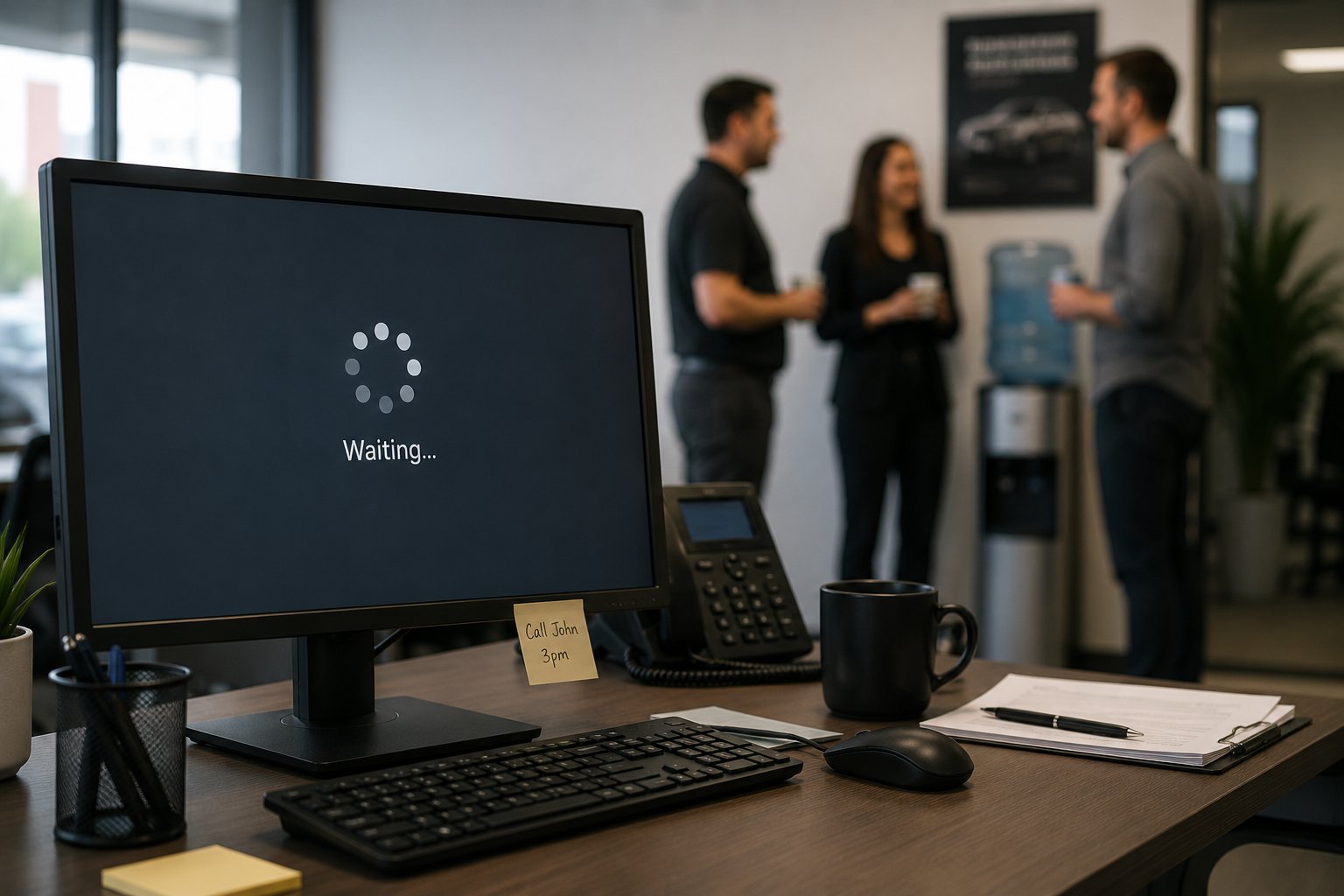
Improving productivity isn't always about hiring more employees or asking your existing team to work harder. More often, it's about removing the obstacles that prevent people from doing their jobs efficiently.
Every dealership has opportunities to improve the way work gets done. Sometimes those opportunities involve better processes. Other times, they involve training, communication, or workflow improvements. And in many cases, they involve technology.
When employees have reliable tools, consistent systems, and fewer technology-related interruptions, they can spend more time helping customers, completing work, and contributing to the dealership's success.
In this guide, we'll examine how technology affects employee productivity, the common issues that slow dealership teams down, and practical ways to create a more efficient workplace.
Why Employee Productivity Matters
Every employee at your dealership depends on technology to do their job.
Sales consultants rely on dealership management systems and CRM software to guide customers through the buying process. Service advisors schedule appointments, communicate with customers, and manage repair orders. Technicians access manufacturer resources and diagnostic software, while accounting, parts, and management teams depend on technology to keep daily operations moving efficiently.
When technology works reliably, employees stay focused on customers and the work that generates revenue.
When it doesn't, productivity suffers.
A slow computer, an unreliable Wi-Fi connection, or a recurring software issue may only interrupt one employee for a few minutes. But those interruptions rarely happen in isolation. They delay customer interactions, slow communication between departments, create additional support requests, and often pull managers away from higher-value responsibilities to help resolve problems.
Over time, these small interruptions become part of the daily routine. Employees adapt, work around them, and eventually accept them as "just the way things are." The problem is that every workaround adds friction to the workday, reducing efficiency and making it harder for employees to perform at their best.
The most productive dealerships aren't necessarily the ones with the newest technology. They're the ones where technology quietly supports the business—allowing employees to stay focused on serving customers instead of fighting with their tools.
When technology gets out of the way, employees accomplish more, customers receive better service, and the dealership operates more efficiently.
7 Ways Technology Improves Employee Productivity
Improving employee productivity isn't about purchasing the latest technology—it's about giving your team reliable tools that help them work efficiently every day. When technology supports your employees instead of slowing them down, they spend more time serving customers and less time dealing with interruptions.
Here are seven ways the right technology strategy can improve productivity across your dealership.
1. Reducing Downtime Keeps Employees Focused
Every minute an employee spends waiting on technology is a minute they're not helping a customer, processing paperwork, or completing a repair order.
Whether it's a slow computer, a software issue, or an internet outage, unexpected downtime interrupts workflows and forces employees to stop what they're were doing. Even brief interruptions can have a ripple effect throughout the dealership, delaying customer interactions and reducing overall efficiency.
Reliable technology and proactive maintenance help minimize these disruptions so employees can stay focused on their work instead of troubleshooting technology.
2. Faster Systems Improve Workflow Efficiency
Employees interact with technology hundreds of times throughout the day.
Logging into applications, opening repair orders, accessing customer records, printing documents, and switching between systems are all routine tasks. When these systems respond quickly, employees move seamlessly from one task to the next.
While a few seconds may not seem significant, repeated delays throughout the day can noticeably reduce productivity across an entire dealership.
3. Better Collaboration Reduces Delays
Serving customers often requires multiple departments to work together.
Sales, Finance, Service, Parts, Accounting, and Management all rely on timely communication and shared information. When employees can easily access the information they need and communicate effectively, work moves faster and mistakes are reduced.
Reliable email, shared documents, cloud applications, and communication tools help departments stay connected and keep work moving forward.
4. Proactive IT Prevents Problems Before They Affect Employees
The best technology support is often the support employees never notice.
Routine maintenance, software updates, system monitoring, and proactive issue resolution help prevent many problems before they interrupt the workday.
Rather than reacting to technology failures, employees simply continue working without unexpected disruptions.
5. Standardized Technology Simplifies Daily Work
When every employee uses different computers, software versions, or processes, support becomes more complicated and training takes longer.
Standardizing technology creates a consistent experience throughout the dealership. Employees know what to expect, new team members become productive more quickly, and technical issues are easier to resolve.
Consistency reduces confusion and helps employees work more efficiently.
6. Strong Cybersecurity Protects Productivity
Cybersecurity isn't just about protecting sensitive information—it's also about protecting your dealership's ability to operate.
Cyberattacks, ransomware, phishing emails, and compromised accounts can bring business operations to a halt. Even recovering from a relatively small security incident can consume valuable employee time and disrupt customer service.
A layered cybersecurity strategy helps employees continue working safely while reducing the likelihood of costly interruptions.
7. Strategic Technology Planning Supports Long-Term Growth
Productivity improvements don't happen by accident.
Dealerships that regularly evaluate their technology, replace aging hardware before it fails, and plan for future business needs are better positioned to support growth without unnecessary disruptions.
Rather than reacting to technology problems, they make informed decisions that keep employees productive and the business moving forward.
Technology becomes a business asset instead of a recurring obstacle.
Common Technology Problems That Reduce Productivity
Most dealerships don't lose productivity because of one major technology failure.
Instead, it's the accumulation of small, recurring issues that interrupt employees throughout the day. Individually, these problems may only cost a few minutes. Over weeks and months, however, they can have a significant impact on efficiency, customer service, and employee morale.
Some of the most common productivity obstacles include:
Aging Computers
Older computers often take longer to start, run applications more slowly, and become less reliable over time. Employees spend more time waiting and less time working, especially when using resource-intensive dealership applications.
Unreliable Wi-Fi
Wireless connectivity is essential throughout today's dealership. Poor coverage or intermittent connections can disrupt communication, delay customer transactions, and make it difficult for employees to access the systems they rely on.
Recurring Technical Issues
The same printer that frequently goes offline. The workstation that freezes every afternoon. The software application that regularly crashes.
When recurring issues aren't addressed at their root cause, employees develop workarounds that reduce efficiency and increase frustration.
Too Many Passwords and Logins
Employees often juggle multiple systems throughout the day, each requiring separate credentials. Forgotten passwords and account lockouts interrupt workflows and generate unnecessary support requests.
Outdated Software
Running outdated operating systems or applications can create compatibility issues, reduce performance, and expose the dealership to security risks. Keeping software current helps ensure employees have access to reliable, secure, and fully supported tools.
Reactive IT Support
If technology only gets attention after something breaks, employees are more likely to experience unexpected interruptions. A reactive approach often results in more downtime, increased frustration, and lost productivity compared to proactively maintaining systems.
How to Improve Employee Productivity at Your Auto Dealership
Improving productivity does not always require hiring more employees or asking your existing team to work harder. In many cases, the greatest gains come from removing recurring obstacles and making it easier for employees to complete their work.
The goal is not to purchase technology for its own sake. It is to identify where employees lose time, determine what is causing those delays, and make targeted improvements that support the way each department operates.
Here are five practical steps dealerships can take.
1. Identify Where Employees Are Losing Time
Start by asking employees which technology problems interrupt their work most often.
Common answers may include slow computers, unreliable wireless connections, recurring printer problems, difficult login processes, or applications that freeze during busy periods.
Support-ticket data can also reveal patterns. If the same employee, device, department, or application generates repeated requests, the problem may be more than an isolated inconvenience.
The first step toward improving productivity is understanding where friction occurs and how frequently it affects the workday.
2. Resolve Root Causes Instead of Repeating Temporary Fixes
Repeatedly restarting a computer, reconnecting a printer, or resetting an application may restore service temporarily, but it does not solve the underlying problem.
Recurring issues should be investigated until their root cause is identified. That may involve replacing failing equipment, correcting a configuration problem, improving network coverage, updating software, or changing an inefficient process.
A permanent solution may require more effort initially, but it prevents employees from losing time to the same problem again and again.
3. Replace Aging Technology Before It Disrupts Operations
Waiting for a computer, server, firewall, or network device to fail can lead to unplanned downtime and emergency expenses.
A technology lifecycle plan allows the dealership to evaluate equipment based on its age, performance, warranty status, security support, and importance to daily operations. Replacements can then be scheduled and budgeted before unreliable equipment begins affecting employees or customers.
Planned replacement is usually less disruptive than emergency replacement.
4. Standardize the Employee Technology Experience
Employees can work more efficiently when computers, applications, security settings, and support processes are consistent.
Standardization makes it easier to train new employees, move staff between workstations, deploy updates, and resolve technical issues. It also reduces the number of unusual configurations that can create support problems.
The objective is not to make every employee's role identical. It is to create a reliable foundation that supports different departments without unnecessary complexity.
5. Review Productivity as Part of Technology Planning
Productivity should be discussed during regular technology reviews.
Dealership leaders and their IT provider should evaluate questions such as:
- Which recurring issues consume the most employee time?
- Which departments experience the most interruptions?
- Is aging equipment affecting performance?
- Are employees creating workarounds because systems are difficult to use?
- Which improvements would have the greatest operational impact?
These conversations help ensure technology decisions are based on business priorities rather than isolated technical concerns.
Improving productivity is not about installing more technology. It is about creating a dependable work environment where employees can complete tasks efficiently, collaborate across departments, and remain focused on customers.
When technology planning is connected to employee performance, the dealership gains more than reliable systems. It gains time, consistency, and greater value from the team it already has.
How to Measure the Impact of Technology on Employee Productivity
Improving productivity is only valuable if you can see the results.
While every dealership measures success differently, technology improvements should ultimately support measurable business outcomes—not just reduce the number of IT support tickets.
As you make technology improvements, look for changes in areas such as:
Reduced Downtime
Employees spend less time waiting for computers to start, applications to load, or technical issues to be resolved. Fewer interruptions allow departments to stay focused on serving customers throughout the day.
Faster Customer Service
Reliable technology helps employees complete transactions more efficiently. Whether it's checking in a service customer, locating vehicle information, or processing paperwork, fewer technology delays often translate into a better customer experience.
Fewer Recurring Support Issues
If the same technology problems continue to occur week after week, productivity improvements will be limited. A decrease in recurring support requests is often a sign that underlying issues have been successfully resolved.
Improved Employee Satisfaction
Technology frustrations contribute to employee stress and can make even routine tasks more difficult. Providing employees with reliable tools helps create a smoother work environment and allows them to focus on the work they were hired to do.
Greater Operational Efficiency
One of the most meaningful measures of success is how efficiently the dealership operates as a whole.
Departments communicate more effectively. Employees spend less time waiting on technology. Managers deal with fewer interruptions. Customers receive faster service.
These incremental improvements often have a greater impact than any single technology upgrade.
Technology should never become the center of your business.
Instead, it should quietly support your employees, improve daily operations, and help your dealership achieve its business goals. When that happens, productivity becomes more than a technology metric—it becomes a competitive advantage.
Frequently Asked Questions
How does technology affect employee productivity?
Technology affects nearly every task employees perform throughout the day. Reliable computers, networks, software, and business applications help employees complete work efficiently, while recurring technical issues, slow systems, and downtime create interruptions that reduce productivity and impact customer service.
What technology problems reduce employee productivity the most?
Some of the most common productivity challenges include aging computers, unreliable Wi-Fi, recurring software issues, outdated hardware, multiple passwords, and reactive IT support. While each issue may seem minor on its own, together they create ongoing interruptions that slow employees down throughout the workday.
Can managed IT services improve employee productivity?
Yes. A proactive managed IT provider helps prevent technology issues before they interrupt operations, maintains reliable systems, keeps software up to date, and resolves recurring problems. The result is fewer disruptions and more time for employees to focus on serving customers.
How do you know if technology is improving productivity?
The impact is often reflected in business outcomes rather than technical metrics. Indicators include fewer technology-related interruptions, reduced downtime, faster customer service, improved employee satisfaction, and smoother day-to-day operations across the dealership.
What technology investments have the biggest impact on productivity?
Every dealership is different, but replacing aging computers, improving network reliability, standardizing technology, strengthening cybersecurity, and proactively maintaining systems are among the most effective ways to support employee productivity.
How often should dealership computers be replaced?
Most business computers should be evaluated after three to five years, depending on their performance, reliability, warranty status, and the demands of the applications they run. Replacing technology before it becomes unreliable helps minimize downtime and keeps employees productive.
Conclusion
Employee productivity is one of the most important drivers of a successful dealership. While many factors influence how efficiently your team works, technology plays a critical role in supporting—or slowing down—daily operations.
Reliable systems, proactive technology management, and strategic planning help employees spend less time dealing with technical issues and more time serving customers. The result isn't just fewer support requests or newer computers. It's smoother operations, better customer experiences, and a more productive workplace.
Technology should never be an obstacle to your dealership's success. When it's properly planned, maintained, and aligned with your business goals, it becomes a tool that helps your employees perform at their best and supports the long-term growth of your dealership.
Complimentary Dealership Productivity & Technology Review
If your employees are losing time to slow computers, recurring technical issues, or outdated technology, identifying those bottlenecks is the first step toward improving efficiency.
Our Complimentary Dealership Productivity & Technology Review helps identify technology-related obstacles that may be affecting your team's performance.
During the review, we'll evaluate:
- Employee workstations and hardware performance
- Network and Wi-Fi reliability
- Recurring technology issues
- Hardware lifecycle and replacement planning
- Technology standardization across departments
- Opportunities to improve productivity and reduce downtime
You'll receive practical recommendations designed to help your dealership create a more efficient technology environment—so your employees can spend less time dealing with technology and more time serving customers.
Call 862-201-5710 or schedule your Free 20-Minute Dealership IT Review and discover how the right technology strategy can help improve productivity across your dealership.